
The Rise of Seamless Living: How Fitted Furniture Is Defining Open Plan Homes in 2026
Open plan living has been a mainstay of British interiors for years, but in 2026 it is undergoing a quiet evolution. The vast, undefined spaces that once dominated new builds and renovations are being rethought, not replaced, but refined. And at the centre of this shift is one key element: fitted furniture.
This is not just about storage. It is about structure, flow and creating homes that feel intentional rather than sprawling.
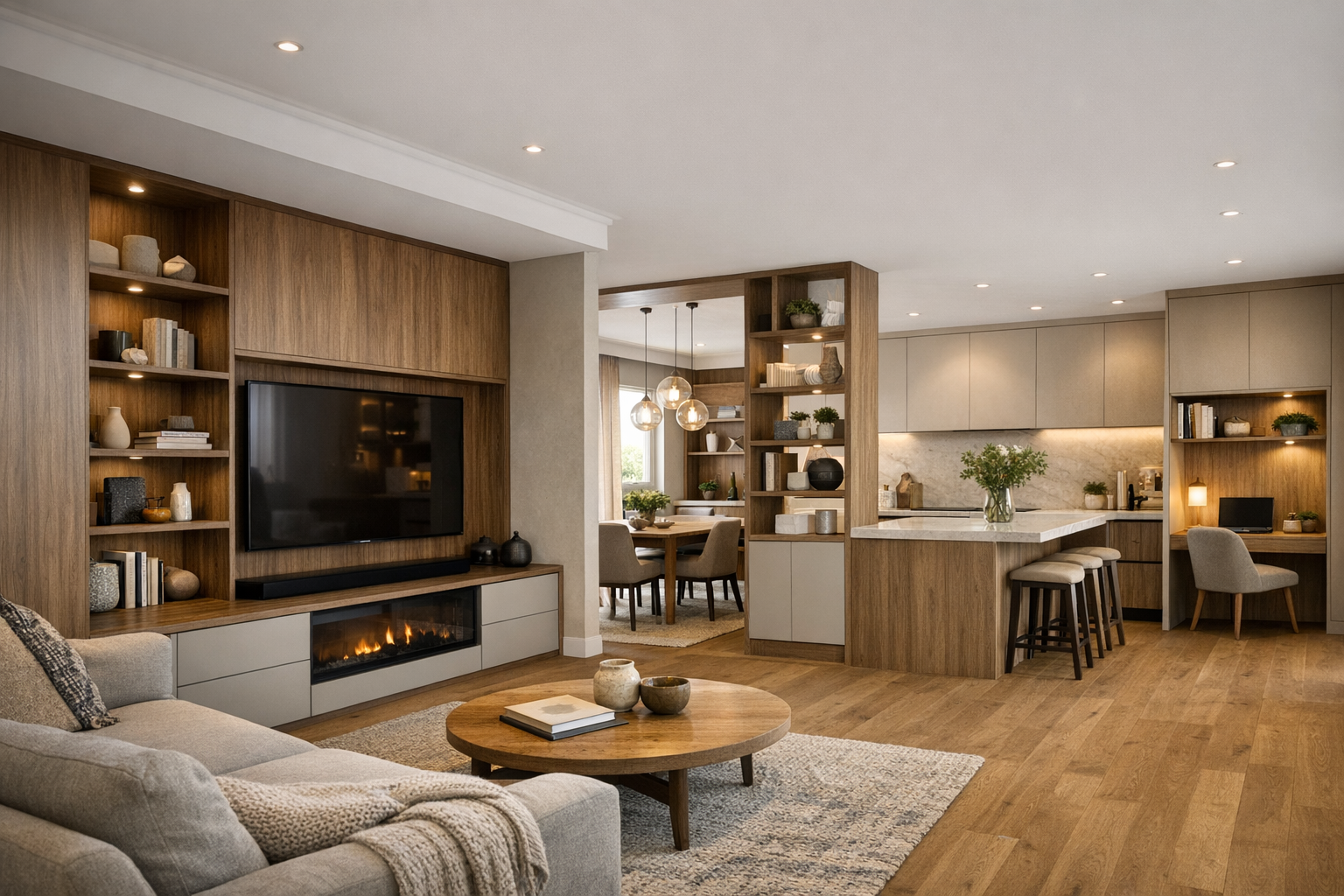
Open Plan, But With Purpose
The appeal of open plan living has always been obvious. Light filled spaces, flexibility and a sense of connection between rooms all contribute to a more sociable home. But over time, many homeowners have discovered the downside.
Without clear zones, spaces can feel chaotic. Kitchens bleed into living areas, workspaces creep into dining rooms, and storage becomes an afterthought rather than a feature.
In 2026, the focus has shifted from open to organised openness.
Fitted furniture is emerging as the solution, offering a way to subtly define areas without interrupting the flow that makes open plan living so attractive.
Zoning Without Walls
One of the biggest interior trends right now is the idea of “invisible zoning”. Instead of adding partitions or bulky furniture, designers are using built in elements to shape how a space is used.
A fitted media wall can anchor a living area. A bespoke shelving unit can gently separate a dining space from a kitchen. Even a run of floor to ceiling cabinetry can create a natural transition between zones.
The result is a layout that feels intuitive. You know where each space begins and ends, but nothing feels closed off.
The Shift Towards Seamless Design
A key reason fitted furniture is thriving in 2026 is its ability to create a seamless aesthetic.
Freestanding pieces, while flexible, can often feel disjointed in large open plan areas. In contrast, fitted solutions allow everything to align visually, from cabinetry and shelving through to integrated desks and hidden storage.
This creates a sense of calm that is increasingly valued in modern homes.
Handleless finishes, flush surfaces and consistent materials all contribute to a look that feels cohesive and considered. It is not about making a statement piece stand out, but about making the entire room work together.
Storage That Disappears
Clutter is the natural enemy of open plan living. With fewer walls to hide behind, everything is on display.
This is where fitted furniture comes into its own.
Built in storage can be designed to maximise every inch of available space, from alcoves and awkward corners through to full wall installations. More importantly, it can be designed to disappear.
Push to open cupboards, concealed compartments and integrated appliances all help maintain clean lines, allowing the space to feel open without sacrificing practicality.
In 2026, the best storage is the kind you do not immediately notice.
Multi Functional Living, Done Properly
Homes are working harder than ever. Living rooms double as offices. Kitchens become social hubs. Spare corners transform into study areas.
Fitted furniture enables this flexibility without compromise.
A bespoke unit can incorporate a desk that tucks away at the end of the day. A window seat can double as hidden storage. A media wall can integrate shelving, lighting and cabinetry in one cohesive design.
Rather than adding more furniture to meet different needs, fitted solutions allow a single design to do it all.
Designed Around You
Perhaps the biggest advantage of fitted furniture is its ability to be completely tailored.
No two homes are the same, and in 2026, homeowners are increasingly rejecting one size fits all solutions. Instead, there is a growing demand for interiors that reflect how people actually live.
Fitted furniture responds to this perfectly.
Whether it is maximising a compact space, creating symmetry in an awkward room, or designing storage around specific needs, bespoke solutions offer a level of precision that freestanding pieces simply cannot match.
A Smarter Investment in the Home
There is also a practical consideration driving this trend.
As property prices remain high, making the most of available space is more important than ever. Fitted furniture is increasingly viewed not as a luxury, but as a smart investment.
By improving functionality, enhancing aesthetics and increasing perceived value, it plays a role in both everyday living and long term resale appeal.
The Future of Open Plan Living
Open plan is not going anywhere. But in 2026, it is growing up.
The focus is no longer on creating the biggest, emptiest space possible. Instead, it is about designing homes that feel structured, efficient and easy to live in.
Fitted furniture is at the heart of this shift.
It brings clarity to open spaces, reduces visual noise and allows homes to adapt to modern life without losing their sense of calm.
In short, it turns open plan living into something far more refined — and far more liveable.
